

dsh-web
zhu1090093659/dsh-webDeepSeek Harness(DSH)Web 插件聚合生态包 · 一切皆插件,创意工坊分发(dsh-market.com)
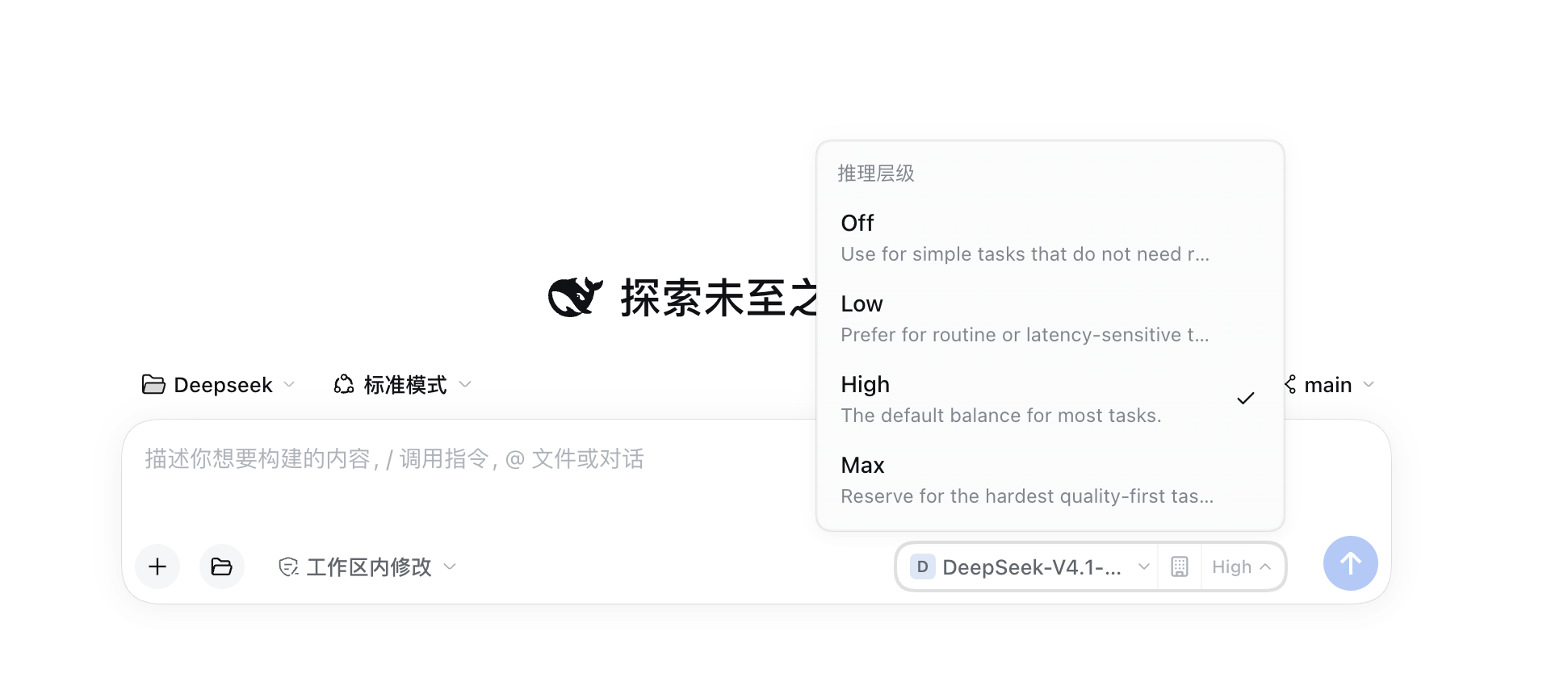
推理层级 / Reasoning Effort
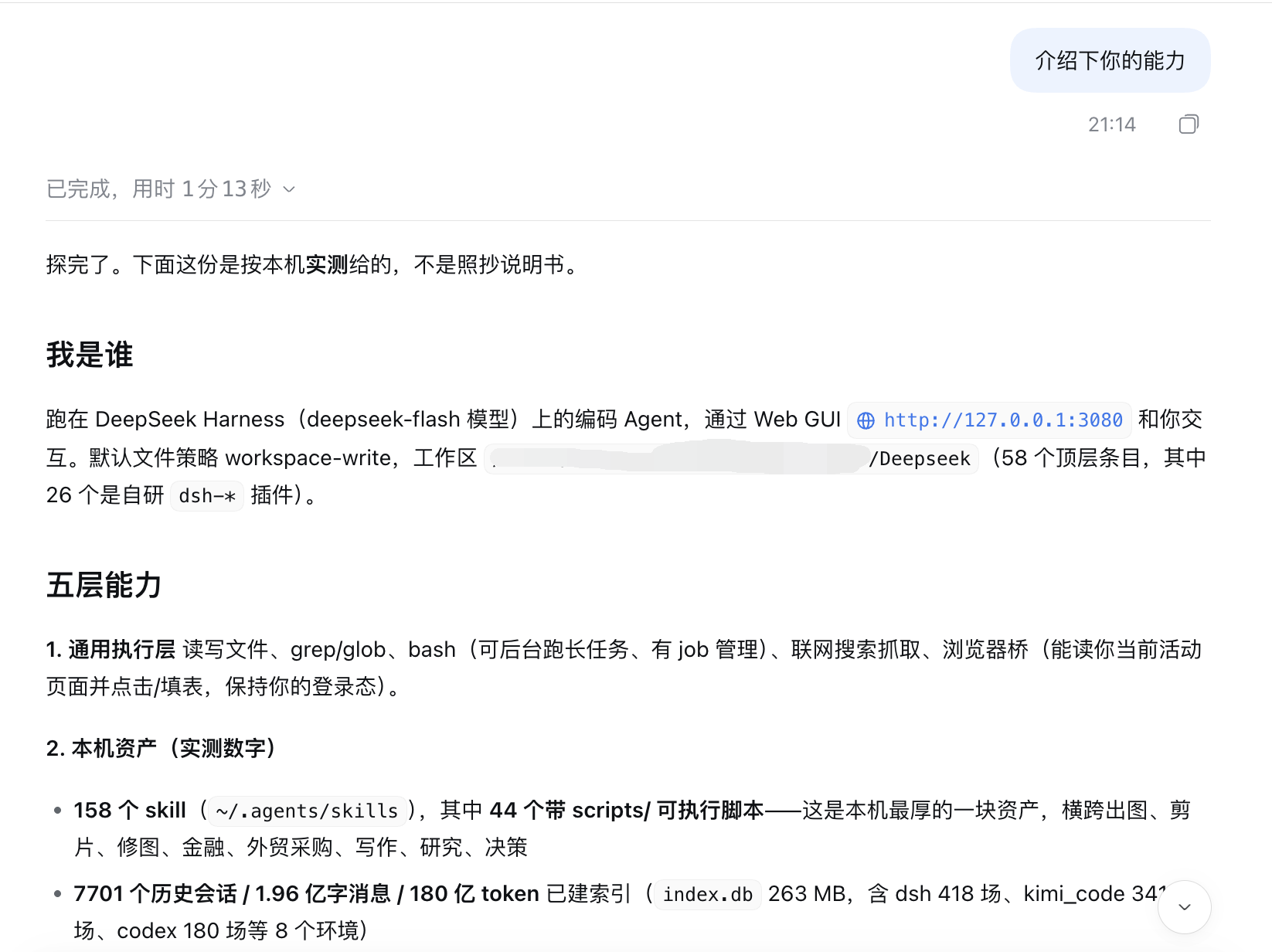
子代理路由 / Subagent Routing
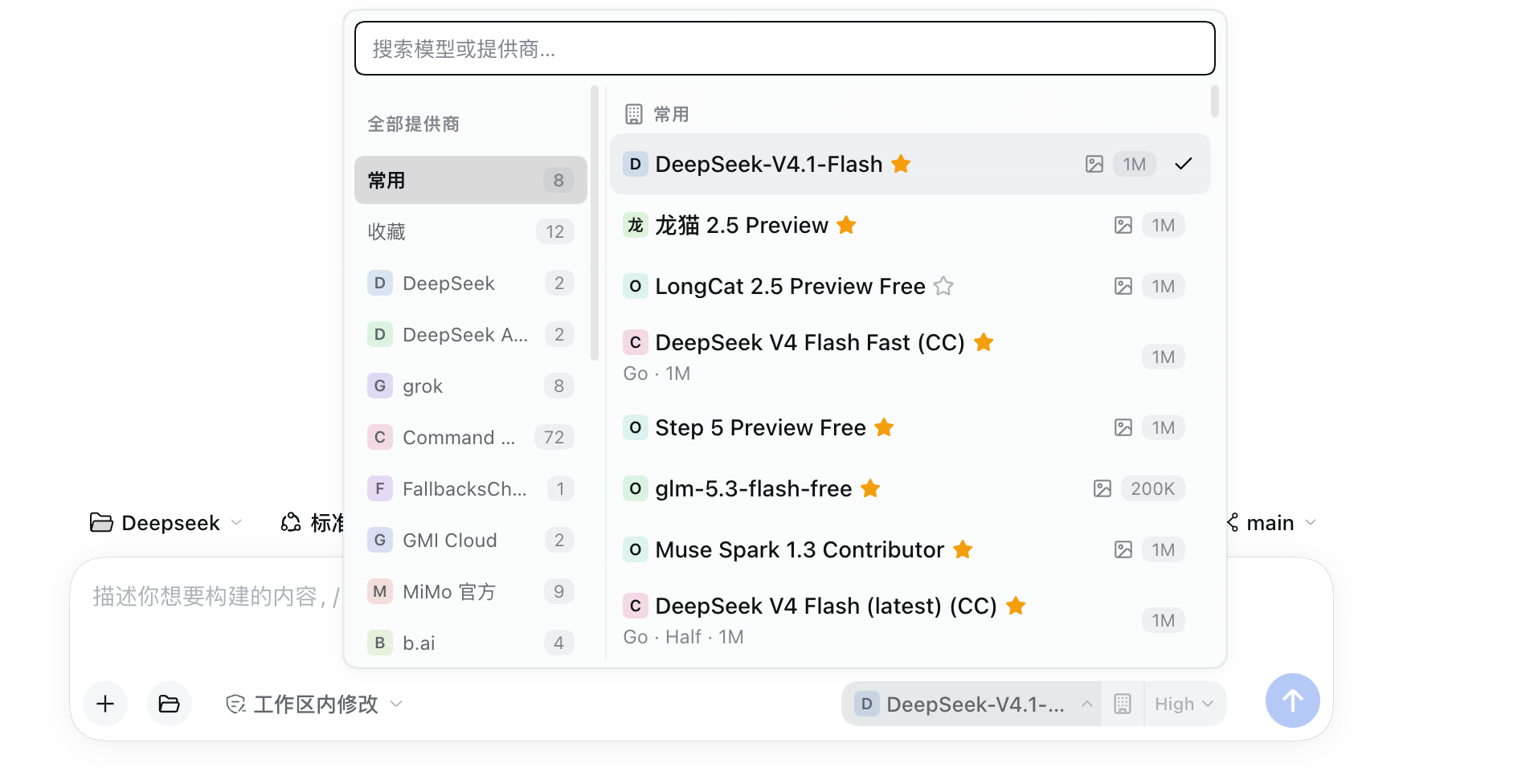
主模型选择 / Main Model Picker

The model menu for the dsh web GUI — pick the model, its effort, and your subagents' model, all from the composer's model seat.
A renamed, maintained fork of ttmouse/dsh-model-picker (v1.18.0 baseline). The upstream picker replaces the composer's model seat with a search-first popup; this fork keeps that and adds the pieces a multi-model daily driver needs.
A three-zone trigger button splits three concerns into three popups:
| Zone | Click | Popup content |
|---|---|---|
| Left (model name) | Opens the model picker | Search box (auto-focused), provider column, model list with price badges and dim discovery rows |
| Middle (subagent icon) | Opens the subagent picker | Per-session model override for subagents (depth ≥ 1) |
| Right (effort) | Opens the effort picker | Available reasoning-effort levels |
Plus a settings-page 「模型选择」 card: discovery master switch, ignore/restore for discovered models, hidden-model management — linked live with the picker.
Upstream: ttmouse/dsh-model-picker
(MIT). This repo renames the package to dsh-models and maintains the
enhanced build (subagent routing, dim bridge, settings card, zh/en locale,
custom background color, theme readability fixes). Routes
(/api/model-picker/…) and dsh.modelPicker.* storage keys keep their
upstream names so existing preferences migrate seamlessly.
Requires harness ≥ 0.2.0-rc.1 (verified on 0.2.0-rc.2; also running on 0.2.1-alpha.3).
curl -fsSL https://raw.githubusercontent.com/taxueseek/dsh-models/main/install.sh | sh
# restart dsh web
Manual equivalent:
dsh plugin --profile web add git+https://github.com/taxueseek/dsh-models.git
# restart dsh web
The npm package named
dsh-modelsis an unrelated third-party placeholder — install only via the script or the git command above.
| dsh-models | Harness | Notes |
|---|---|---|
| 0.1.4 | 0.2.1-alpha.3 (current, running) | Virtualized model list + dim refresh throttle; seat and route surfaces unchanged. |
| 0.1.0 | 0.2.0-rc.2 (measured) | Code-identical to the enhanced build running in production; client resolves against the official 0.2.0 slot roster. |
Requires Node.js ≥ 22.19 (the floor the picker is developed and tested on).
What was actually checked on 0.2.0-rc.2 (this code, pre-rename build):
conversation.input.model, web-ui.plugin.item;
every icon used exists in the official browser roster.settings.plugin.item seat is not used; the settings card renders as a
plain section (no locale field — a localized seat entry renders invisible).scope.set()
resolves false), so card preferences live in localStorage
(dsh.modelPicker.* + cross-tab event) instead of webUiSettings.No host-side config knobs yet — the bundle entry carries no config block.
User preferences (discovery switch, ignored/discovered models, hidden models,
background color, per-session subagent routes) are managed from the
settings-page card and the picker itself.
dim bridge (optional)When a dim CLI is present (dim on PATH or ~/.local/bin/dim), the host
merges its catalog into the model facts: price badges, maxOut/released
facts, and discovery rows for models dim knows that the dsh directory does
not (capped at 30 per provider, newest first). Without dim the picker works
exactly like upstream — the bridge degrades to directory-only facts.
npm test — two pure-Node suites: scripts/host-route.mjs drives the
real route handlers (facts cache, subagent route, error guards),
scripts/interaction.mjs renders the picker in jsdom and drives
open/search/favorite/effort/virtual-window — 92 checks total. They SKIP
cleanly when the harness peer deps are absent, so the suite stays green on
any machine./api/model-picker/models cache answers
a fast 503 while the catalog refresh runs in the background (measured: first
response ~3 ms, warm 200 within ~3 s); the client retries that 503 with
backoff, so price badges appear as soon as the facts land. Warm caches are
served stale-while-revalidate.dim refresh
went 60 s → 10 min — a model catalog that turns over in days no longer costs
~1.5 s of CPU per minute. Full details in the
CHANGELOG.DeepSeek Harness(DSH)Web 插件聚合生态包 · 一切皆插件,创意工坊分发(dsh-market.com)
把回答做成一页可视化 HTML:模型只写简短的 Markdown 草稿,随包附带的 `am` 命令行生成页面,支持流程图、时序图、树、时间线、ER 图、表格和提示框。
在 dsh 里装上这个插件即可,无需登录、注册或填 API Key,就能使用包括 Muse Spark 1.3、MiMo V2.6 在内的前沿模型——完全免费,不限量。 All you do is install this plugin in dsh: no login, no sign-up, no API key — the frontier models are just there, Muse Spark 1.3 and MiMo V2.6 among them. Completely free, with no usage cap.

