

dsh-web
zhu1090093659/dsh-webDeepSeek Harness(DSH)Web 插件聚合生态包 · 一切皆插件,创意工坊分发(dsh-market.com)
中文 · Releases · Validation · Issues
An unofficial, optional Desktop preset maintained by QI-seven33. It retains the standard capability composition from DeepSeek Harness Desktop 0.2.0-rc.2 and adds limited project-file reads and a JEV authorization check. Your main-model configuration stays in use; the standard preset is unchanged.
There is no established general speed or safety improvement. Experiments have not shown a consistent benefit for everyday agent tasks. The classifier has known gaps; real-world authorization false-allow/false-block rates remain unmeasured.
In Harness Desktop's Plugins page, install and enable:
github:QI-seven33/dsh-jev-mode#v0.4.4
Alternatively, install the versioned .tgz by URL or absolute local path. The source ZIP is not a plugin package.
Fully restart Harness and select JEV decision mode in a new session. Open Settings → Models → JEV decision model → Edit to save your own TypeSafe API key. Keep your existing DeepSeek main-model settings. The credential dot means configured, not API connectivity verified.
No runtime dependencies or build/install lifecycle scripts are required. Verified environment: Desktop 0.2.0-rc.2 on Windows. Other versions and operating systems need separate validation. See installation details and acceptance steps.
| Request or operation | Behavior |
|---|---|
Explicit query about root package.json or README.md | Code selects the file and uses native read/permissions; zero JEV selection calls. |
| Eligible short contrastive request between those two files | Bounded JEV selection. Confidence and selected probability must both reach 0.9; otherwise ordinary planning continues. |
| Operation classified at risk 2 or above | Hard rules run first, then JEV checks human authorization. Native permission vetoes remain authoritative. |
| Ordinary coding or document task | Standard planning and tools. No automatic skill selection, general preloading, or grounded/sufficient verification loop. |
jev_status reports the version and counters. jev_decide and jev_gate are available for explicitly requested diagnostics. A diagnostic result is not execution permission.
The default decision model is pinned to jev-1.13.0. Authorization uses Noul, thresholds 0.85 / 0.55, and gateAtRisk: 2. Main-model history, reasoning and tool definitions are retained. Cache hits are best-effort, not guaranteed.
Without a TypeSafe key, explicit reads still work, semantic reads fall back, and unavailable authorization checks ask for approval or deny. Choose the standard preset to stop using the mode; disable the plugin in Plugins to remove its contribution.
This is a reliability release: deadline-aware Retry-After handling, instance-local server cooldown, bounded credential lookup, and an auxiliary cancellation-signal repair. User cancellation does not count as a provider failure. It retains the compact settings card and native edit dialog from 0.4.3; the maintainer reported that UI working normally.
The experimental /jev-json-set transaction plugin is not included. Its narrow benchmark gains do not describe this release. See the changelog and validation for exact coverage, skips and measurement limits.
npm --prefix subproject publish and git -C subproject push can miss the JEV gate. A low risk label does not prove safety or authorization.Defaults include controlledFlow: true, semanticReads: true, autoGate: true, onGateFailure: escalate, and statusContext: false. Set semanticReads: false in the mode configuration to use ordinary planning for ambiguous reads. Restart and open a new session after changing preset configuration.
Component-test previews using host React/Modal and a stubbed credentials remote; not an authenticated Desktop session.
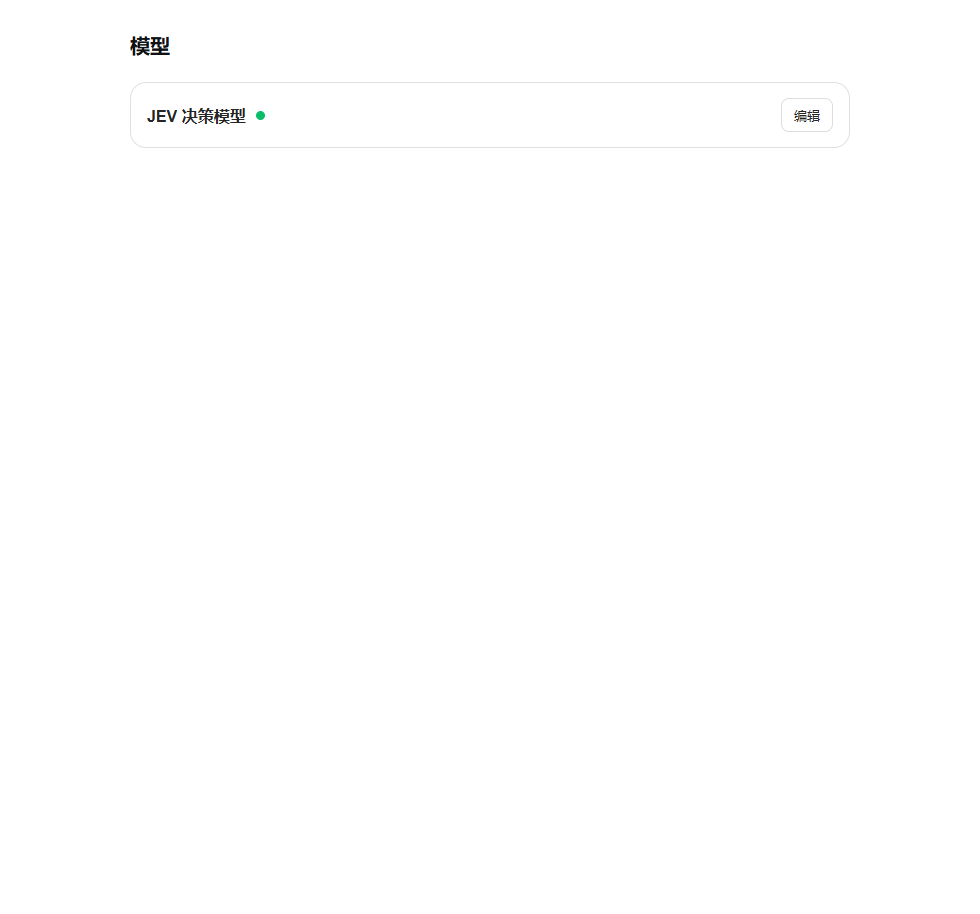
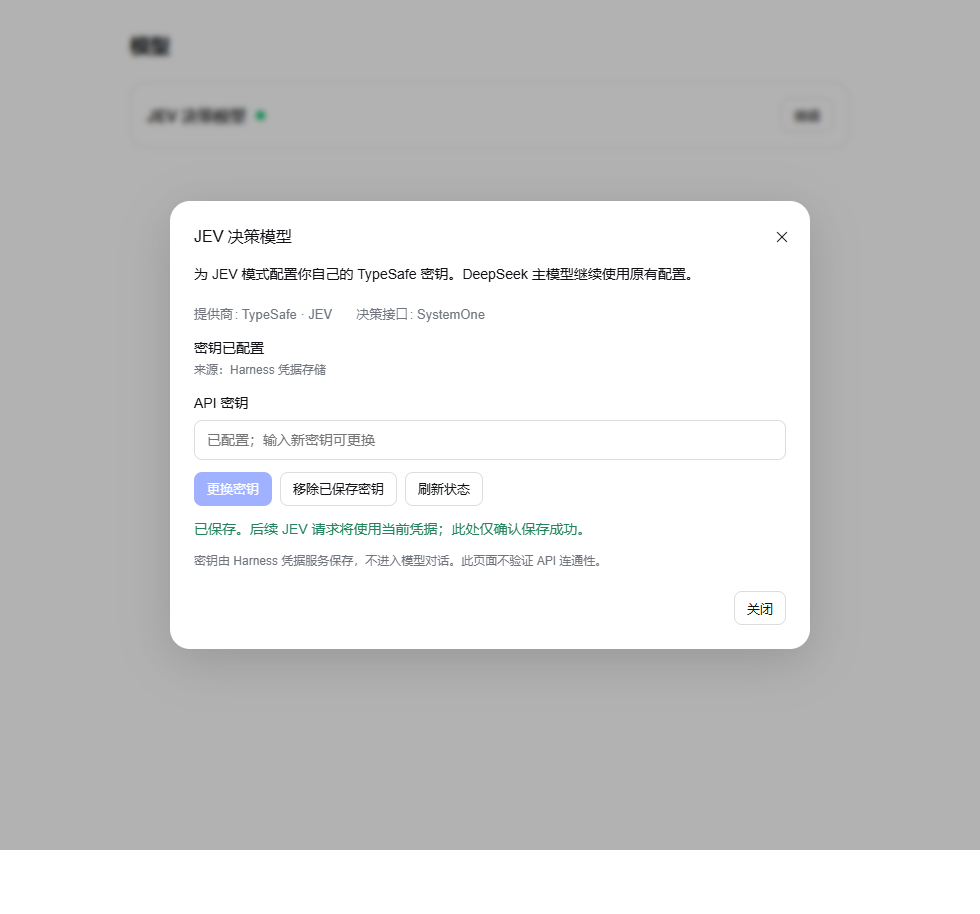
npm install --no-save --no-package-lock yaml@2
npm test
CI runs offline checks on Node 20/22/24. Native checks require Node 24 and host paths via DSH_HOST_NODE_MODULES / DSH_HOST_NATIVE_NODE_MODULES; absent-host skips are not compatibility evidence. Live API checks are opt-in.
For issues, include plugin/host versions, OS, new-session status and minimal reproduction steps. Remove credentials and sensitive content from logs. New feature research is closed; no additional JEV involvement in ordinary tasks is planned.
DeepSeek Harness(DSH)Web 插件聚合生态包 · 一切皆插件,创意工坊分发(dsh-market.com)
把回答做成一页可视化 HTML:模型只写简短的 Markdown 草稿,随包附带的 `am` 命令行生成页面,支持流程图、时序图、树、时间线、ER 图、表格和提示框。
在 dsh 里装上这个插件即可,无需登录、注册或填 API Key,就能使用包括 Muse Spark 1.3、MiMo V2.6 在内的前沿模型——完全免费,不限量。 All you do is install this plugin in dsh: no login, no sign-up, no API key — the frontier models are just there, Muse Spark 1.3 and MiMo V2.6 among them. Completely free, with no usage cap.

