packages/dsh-task-board
zhu1090093659/dsh-web侧边栏多列任务看板:卡片交给真实 DSH 智能体会话执行,支持 cron 定时(Host 侧到点执行,关浏览器也生效)。

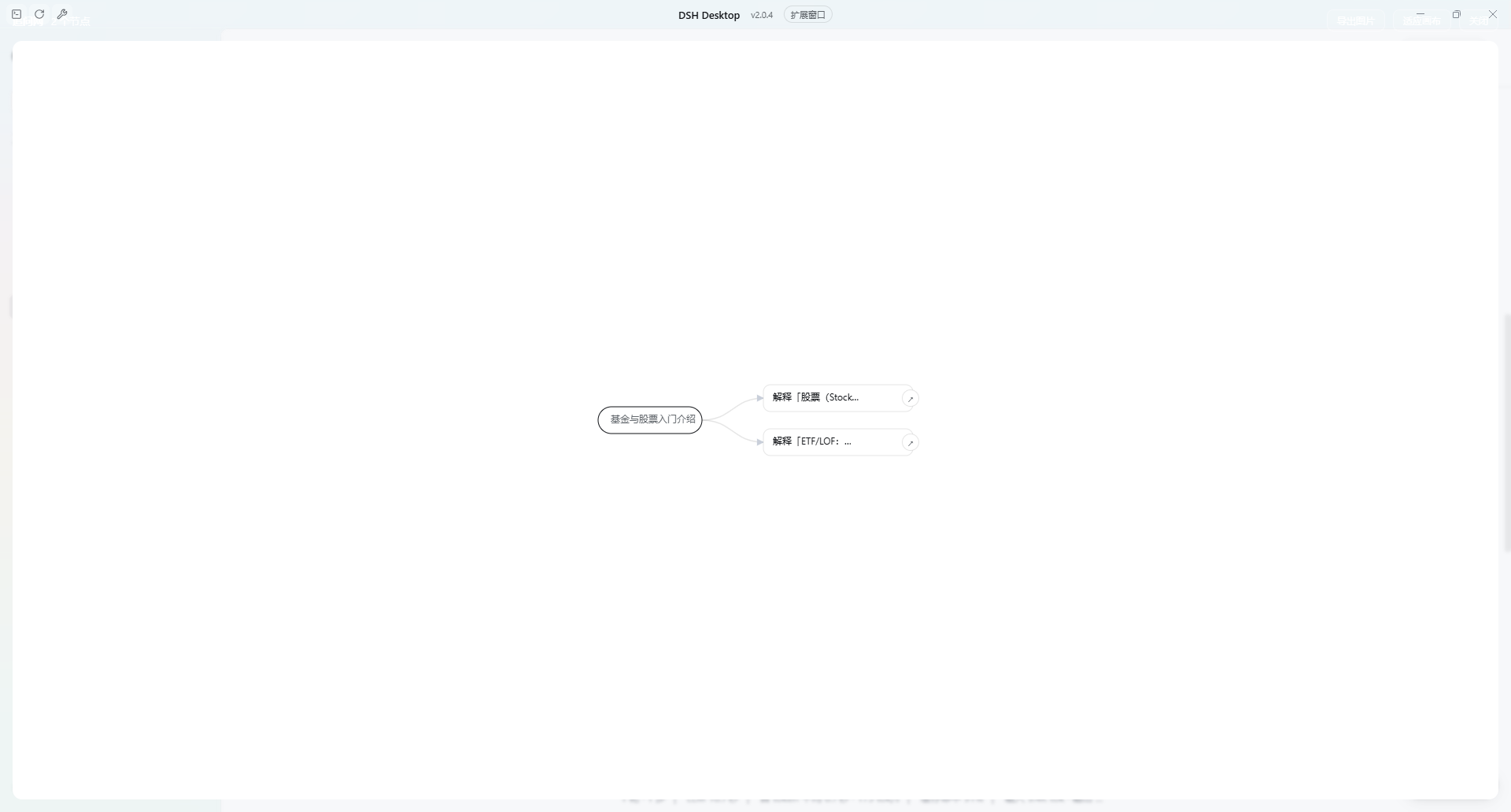
在对话里选中文字横向追问(空上下文的浮卡),所有追问连成一张可浏览的网状图,支持导出 PNG。
Select any text in a DSH conversation to ask a context-free side question — and watch every question you asked grow into a browsable question grid.
A community plugin for DeepSeek Harness (dsh), for DSH Web and DSH Desktop.
English | 中文
scripts/probes/ holds one-off browser/API probes used while debugging; they are not part of the routine checks.
LLM conversations are linear. You ask one question, get five paragraphs back, and one term in the third paragraph is unclear — so you ask about it in the same thread. Ten minutes later the original question is far above the fold, the context is huge, and you only ever wanted to understand that one word.
This plugin lets you select a fragment of text → click “Ask” → get a separate, empty-context mini conversation that answers just that. Every question remembers which text it came from, and all of them form a grid you can browse.
Screenshots date from 0.3.2; the entry button and the grid toolbar were redesigned in 0.3.9 (see “Interface” below).
conversation.input.left slot, so the layout owns its size and
position — it follows the composer when the input grows.| Ask about a selection | Select text in the transcript; a small “Ask” button appears next to it. The popover anchors to the selection — drag its header to move it, drag the corner to resize. |
| No inherited context | Each question is a brand-new session with only the term plus a short quote around it. |
| Keep chatting in the popover | Follow-ups stay in the same side session and never disturb the main thread. |
| Branch by selecting again | Select text inside an answer to spawn a child question — the grid grows by itself. |
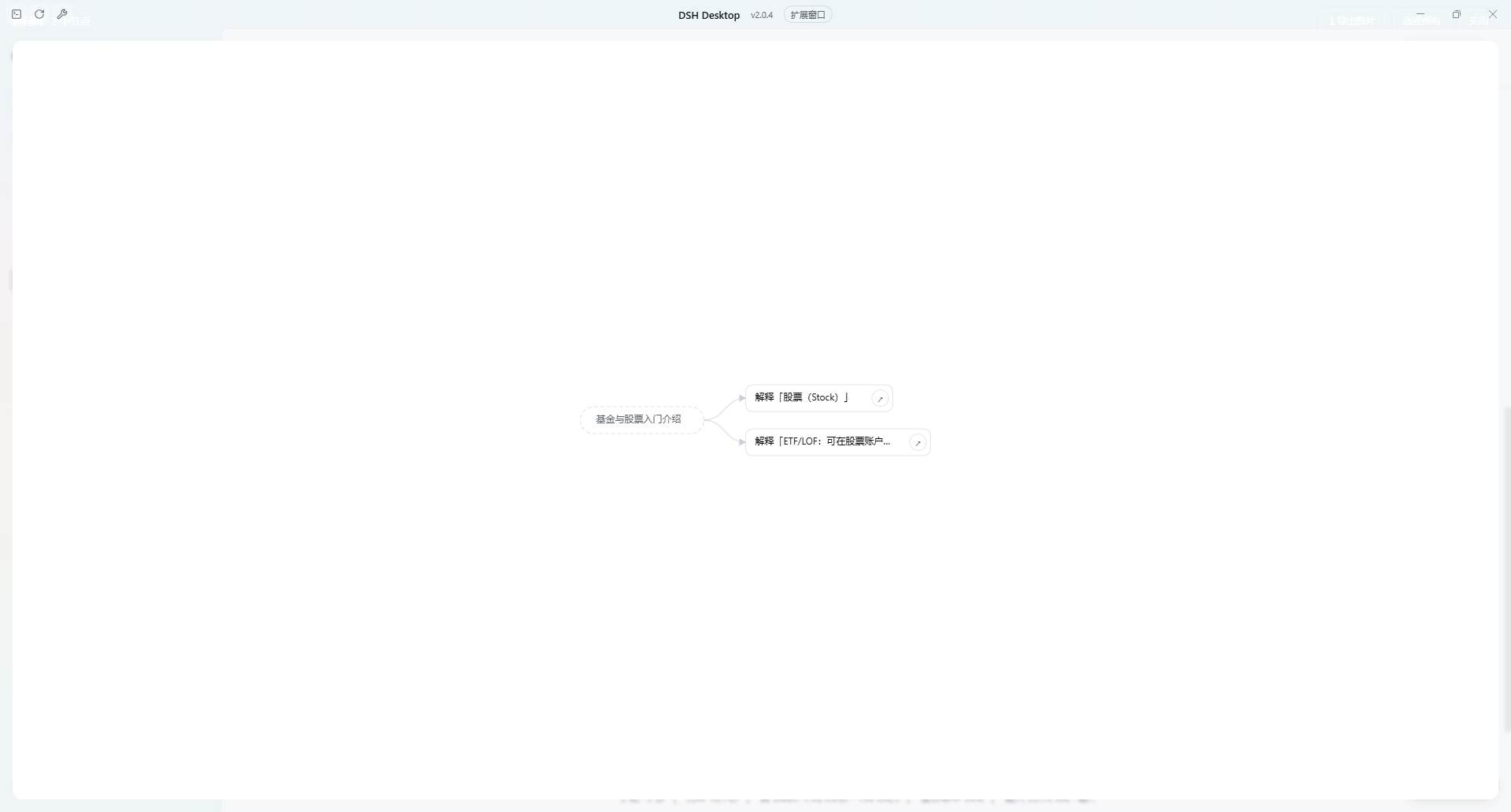
| Question grid | Anchor → root question → sub-questions with directed edges; wheel to zoom, drag the canvas to pan; nodes coloured by depth, hover to highlight the ancestor chain. |
| Three ways to navigate | Click a node's body to switch to that question's session; click the dot on its right edge to peek at the popover without leaving the current session; click a conversation anchor to jump back to where the chain started. |
| Right-click menu | On a node: highlight color (5 swatches), rename (renames the session too), delete (anchors are protected; deleting a node removes its sub-questions); on an anchor: rename the session |
| Name your question | Click the card title to edit it — even while the session is being created; the node label prefers your title |
| Export an image | The download button in the grid toolbar renders the whole grid as a PNG. |
| Survives restarts | The grid and the popover size live in local storage. |
# 尚未发布到 npm 时,直接从 GitHub 安装
dsh plugin --profile web add github:huahuazz/DSH_question_map
发布到 npm 之后可以简写成
dsh plugin --profile web add dsh-question-map。
DSH Desktop: install it from Settings → Plugins, or
dsh plugin --profile desktop add github:huahuazz/DSH_question_map
Then fully quit and restart DSH — client bundles are loaded at composition time.
Alt+Enter). The popover opens anchored to the selection and starts streaming an answer.| Popover | Exported grid |
|---|---|
 |  |
engines.dsh).shell.overlay and conversation.input.left slots, plus
uiConversation, uiWorkspace, sessions, locale and remote.session.conversation.input.left slot the entry button simply does not appear; the popover and the grid
keep working and nothing throws.dsh-question-map:graph; the popover size is stored next to
it as dsh-question-map:card-size.⟂), stored by DSH's own session persistence.This repository is build-free: lib/client.js is hand-written in DSH's browser module format
(window.__ModuleLoader__.load), so there is no bundling step — copy it into the profile and restart.
node scripts/smoke.mjs              # module format / inject list / local storage / delete & clear
node scripts/flow-test.mjs          # create session → prompt → stream → persist → child nodes
node scripts/verify-composition.mjs # manifest ↔ DSH composition contract (skips without a local DSH)
node scripts/pack-check.mjs         # npm publish surface (files / exports / dsh manifest)
node scripts/ci.mjs                 # replay the CI steps in a clean environment (no DSH)
Scripts look for DSH under ~/.dsh/profiles/desktop and the usual install locations; point them elsewhere with:
DSH_PROFILE_DIR="/path/to/profiles/desktop" DSH_APP_DIR="/path/to/resources/app" node scripts/verify-composition.mjs
Before pushing, run node scripts/ci.mjs (or npm test): it replays the GitHub Actions steps in a clean environment without DSH, so a green local run cannot hide a red CI.
Release steps: docs/PUBLISHING.md.
侧边栏多列任务看板:卡片交给真实 DSH 智能体会话执行,支持 cron 定时(Host 侧到点执行,关浏览器也生效)。
DSH Web UI 插件与皮肤合集:任务看板、git 图、右侧面板、远程移动端 UI、桌宠、实时 token 统计与皮肤中心。
助手回复内渲染交互式 UI 组件:布局、图表、表单、测验、mermaid、3D 场景与回传事件循环。